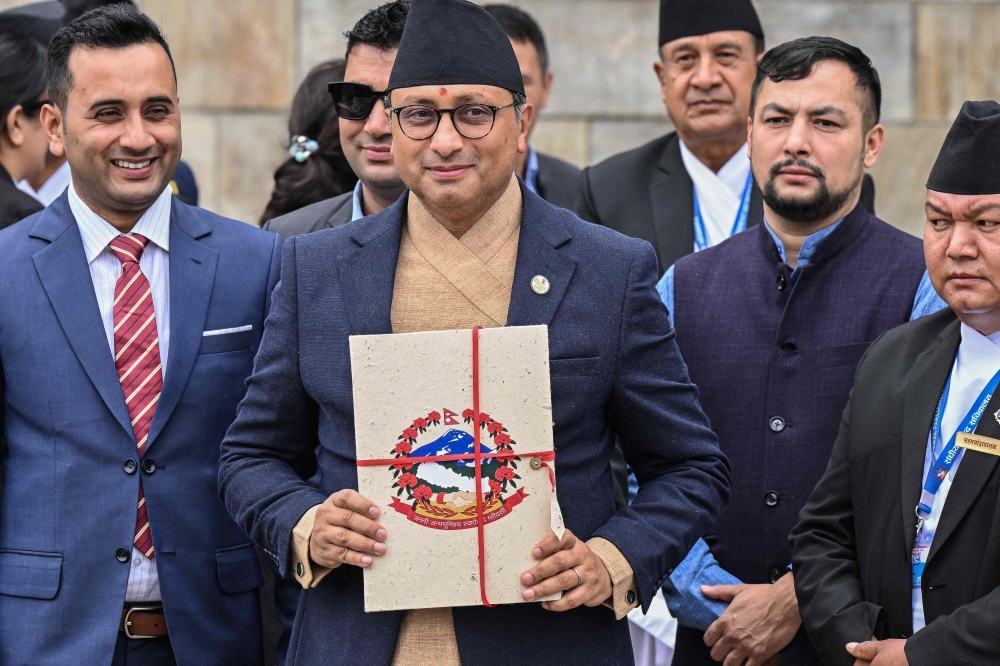
In the quiet years of Nepal’s political transition, the Federal Budget for FY 2083/84 arrives not only as a routine fiscal announcement, but as a turning point shaped by rare political stability and economic urgency. A near two-thirds mandate now stands behind a unified economic vision—aiming to shift Nepal from fragmented policymaking to a coordinated ‘mission-mode’ approach to development.
With a total outlay of Rs. 2124.34 billion, this budget is not merely about allocation. It is about redefinition—of growth, of productivity, and of the role of the state itself.
At its core, the budget aims to achieve 7% GDP growth, not through short-term stimulus, but through structural transformation.
A Political Shift That Enables Economic Ambition
Nepal’s economic planning has long been constrained by political instability and short-term political thinking. Frequent government changes often meant shifting priorities, delayed execution, and weak investor confidence. Development projects remained incomplete, and long-term reforms were repeatedly interrupted.
This time, however, the presence of a stable near two-third majority has changed the tone entirely. The budget reflects confidence, continuity, and a willingness to make difficult structural reforms that go beyond electoral cycles.
It is no longer a budget of compromise—it is a budget of direction.
Stimulating Private Sector Confidence
One of the most important but often under appreciated pillars of this budget is its focus on rebuilding trust with the private sector.
For years, businesses in Nepal have faced complexity in taxation, high import friction, and uncertainty in policy direction. The FY 2083/84 budget directly addresses these concerns through a simplified and more predictable tax structure.
Key reforms include:
- Reduction of customs duty tiers from 11 to 7, simplifying import taxation and reducing bureaucratic friction
- Lower customs rates on 273 types of industrial raw materials, directly reducing production costs for domestic industries
- A major expansion of personal income tax relief, with the exemption limit doubled to Rs. 10 Lakhs, increasing disposable income for the middle class
- A reduction in the maximum personal income tax rate by 10 percentage points to maximum of 29%,down from 39%, aimed at improving investment incentives and labor participation
Together, these reforms signal a shift from a heavily regulated system to a more growth-friendly and consumption-supportive environment. The message is clear: private enterprise is no longer being viewed merely as a revenue source, but as a growth partner.
Technology as the New Growth Engine
Beyond fiscal reforms, the budget places Information Technology at the center of Nepal’s future economy. A 50% tax rebate on IT service exports is designed to position Nepal as a competitive digital services exporter.
Even more ambitious is the plan to establish Nepal’s first Sovereign AI Computing Center in Kathmandu. By leveraging hydropower resources, the government envisions transforming clean energy into high-value digital exports—placing Nepal within the emerging global AI economy.
Energy as an Export Industry
Energy policy in this budget moves beyond domestic supply concerns. With a target of expanding installed capacity to 5535 MW, including 1040 MW of new additions, Nepal is preparing for a structural shift in energy utilization.
The restructuring of the Nepal Electricity Authority into production, transmission, and distribution entities opens space for efficiency and private participation. More importantly, it creates the foundation for cross-border electricity trade, positioning energy as a potential export-led revenue source.
Capital Market Reform: A Step Toward Financial Deepening
The capital market receives a quiet but important reform signal. Capital gains tax on shares is now classified as a final tax, improving clarity and reducing compliance complexity. The revised structure is:
- Short-term holdings (below 1 year): 10% (previously 7.5%)
- Long-term holdings (above 1 year): 7.5% (previously 5%)
Alongside this, reforms are expected in the structure and functioning of NEPSE, including modernization efforts and the introduction of new financial instruments. This represents a gradual shift from a narrow equity-focused market toward a more diversified capital ecosystem capable of supporting broader economic financing needs.
The Nepal Federal Budget 2083/84 introduces strategic legal reforms to encourage Non-Resident Nepalis (NRNs) to participate in the secondary securities market by simplifying foreign investment approvals and profit repatriation processes.
Agriculture: From Survival to Commercialization
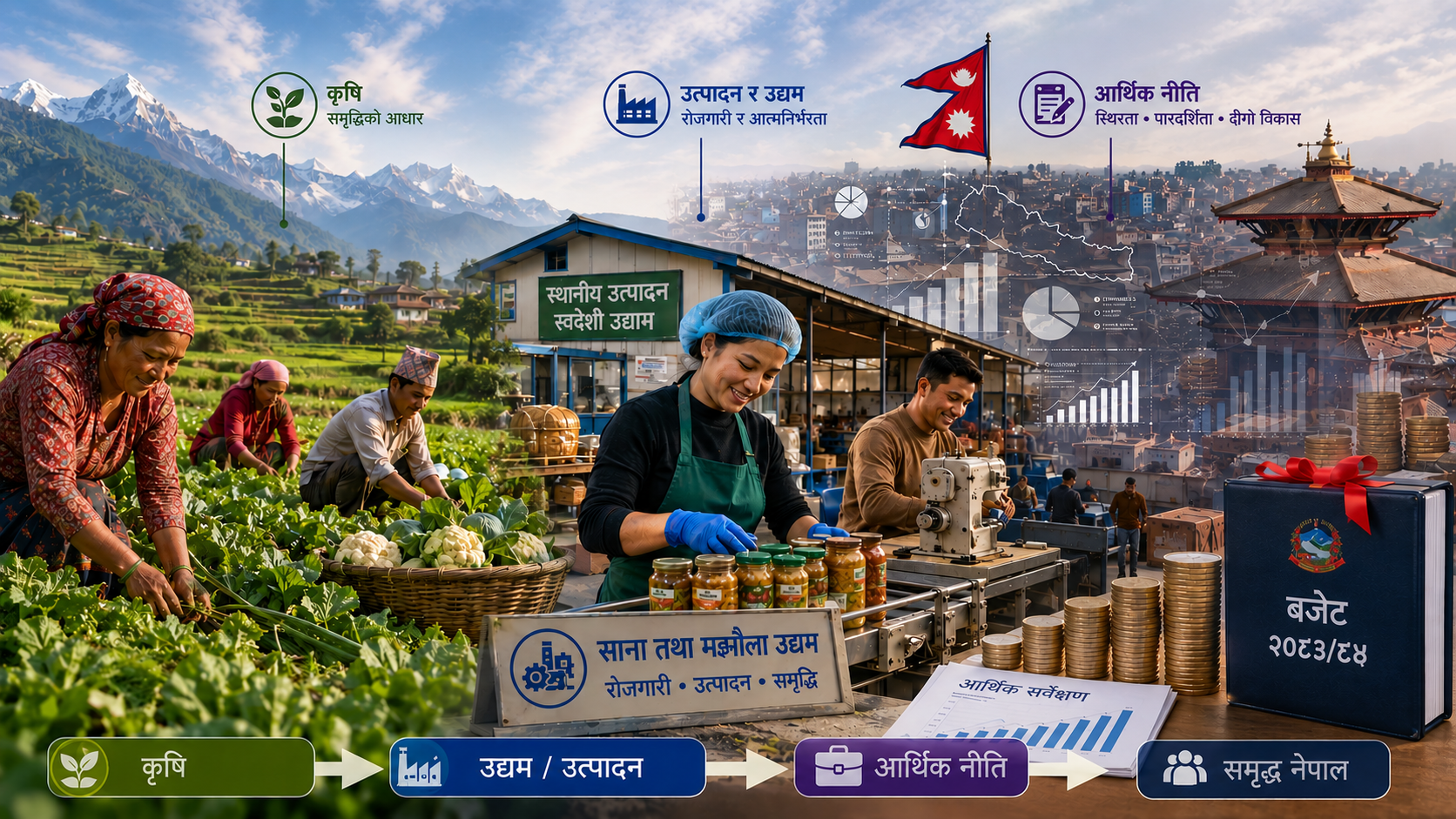
Agriculture policy moves toward scale and commercialization. A 40% capital subsidy for agro and livestock startups encourages investment-led farming, while an 80% insurance premium subsidy reduces risk exposure for farmers. This budget aims to bring 15,800 additional hectares under irrigation this year.
The long-term target is clear: transform agriculture into a structured agribusiness sector rather than subsistence activity.
Infrastructure in “Mission Mode”
Infrastructure development is being reframed through urgency and accountability. Major allocations to the East-West Highway and Kathmandu-Tarai Fast Track reflect this acceleration.
More importantly, the introduction of “Sunset Laws” for projects creates a deadline-driven development culture—projects must be completed on time or restructured.
A Leaner and More Efficient State
Administrative restructuring is another major pillar. The reduction of ministries from 22 to 18, along with the abolition or merger of 31 government entities, reflects an effort to streamline governance.
Estimated savings of Rs. 20 billion is less significant than the broader message: the state is attempting to become leaner, more efficient, and more focused on productive investment.